Respiratory diseases are highly prevalent in winter. Yesterday (5th), the National Health Commission held a press conference to introduce seasonal solar terms and health.
According to experts, the current pathogens of respiratory infections in children are mainly viruses and Mycoplasma pneumoniae, and the main viruses are influenza viruses . At the same time, children are more likely to develop gastrointestinal symptoms than adults when they get the flu.
Experts say that after children are infected with influenza, fever is the main symptom, but they are also accompanied by some symptoms of general discomfort, including muscle pain, headaches, etc. throughout the body. In addition, there will be some respiratory symptoms, including cough, runny nose, sneezing, sore throat, etc. In addition, children and adults are different. Children are more likely than adults to suffer from nausea, vomiting, diarrhea, abdominal pain or loss of appetite after contracting the flu. Generally speaking, most children's influenza is an acute and self-limiting process . The fever usually lasts for about 2 to 3 days, and the overall course of the disease is about a week. But some children will cough for a longer time. Some children will also have symptoms of weakness or fatigue, which may last for a relatively long time.
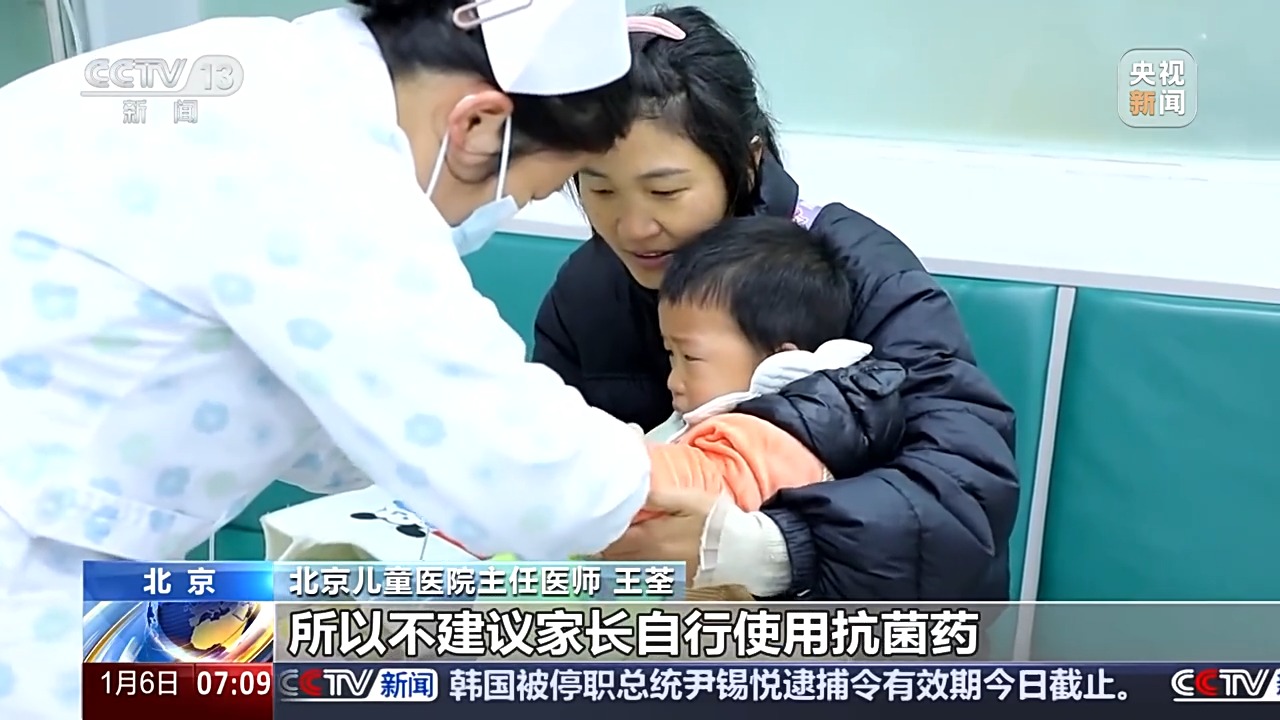
Wang Quan , chief physician of Beijing Children's Hospital : We have anti-influenza virus drugs specifically suitable for children, so if a child is diagnosed with influenza, they should use this anti-influenza virus drug as soon as possible. If possible, try to use the medicine within 48 hours to facilitate the child's recovery and recovery. Because influenza is a virus, antibacterial drugs are useless. Parents are not recommended to use antibacterial drugs on their own.
Febrile seizures—common complications of fever in children
Colds in children are often accompanied by fever and even febrile convulsions. Febrile seizure itself is a common complication of children's fever, which is more common in children aged 6 months to 5 years old. It often occurs in the first 24 hours of a child's fever, and the body temperature is above 38.5°C in most cases. What do febrile seizures look like?
Wang Quan , Chief Physician of Beijing Children's Hospital : Once a child has a febrile convulsion, the main symptoms are eyes turning up, limbs stiff, or twitching, the perioral area is purple, and the teeth are clenched. If you call him at this time, there will be no response. of. Under normal circumstances, children's febrile convulsions last relatively short and end on their own in about 3-5 minutes.
febrile convulsions in children
There are several things parents must not do
Experts say that if a child has a convulsion, parents are advised to first place the child on a safe, flat surface. In addition, experts also suggest that there are several things that parents must not do.
Wang Quan , chief physician of Beijing Children's Hospital : First, do not put anything into the child's mouth, including spoons, chopsticks, and even adult fingers. Second, do not give your child anything during a convulsive attack, including food, water, or medicine. Third, do not try to restrain the child's twitching limbs to stop the child from convulsing during a seizure.
Read the original text:https://life.gmw.cn/2025-01/06/content_37780917.htm